
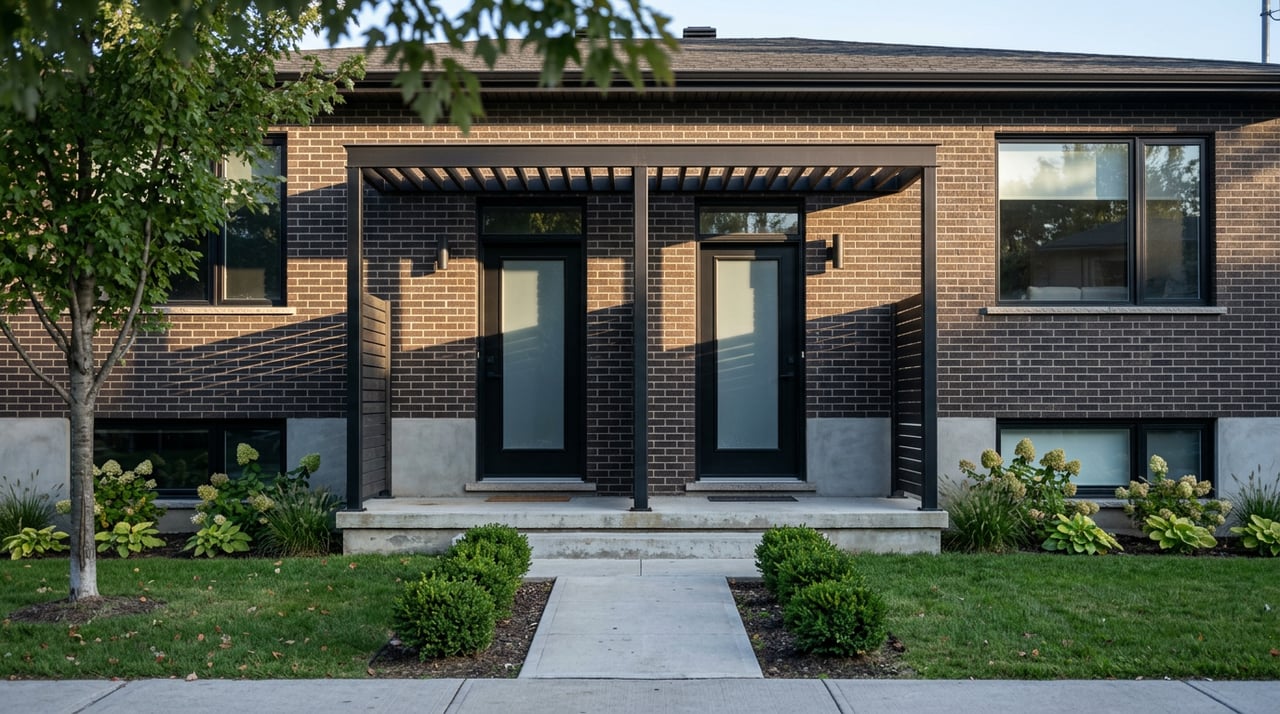
Could your next home help pay your mortgage? In Orland Park, house hacking and small multi-family ownership can offset living costs, build equity faster, and open the door to long-term wealth. If you are comparing a duplex, a 2–4 unit, or a single-family with a rentable suite, the local rules and numbers matter. In this guide, you will learn how Orland Park’s zoning, rental licensing, financing options, and typical rents line up so you can move with confidence. Let’s dive in.
What house hacking means
House hacking is when you live in one unit and rent the others, or you rent a secondary space in your home. You might buy a duplex, convert part of a single-family home into a legal accessory dwelling unit, or finish a basement or in-law suite that meets code. The rental income helps cover your mortgage and expenses while you build equity.
Orland Park market snapshot
Orland Park’s typical home value sits in the mid to high $300Ks, based on public aggregator data. For quick context, the Orland Park area shows a mid $300K value range on widely used trackers like Zillow’s local index.
Median asking rents across unit types often land around the low to mid $2,000s per month. Recent datasets show medians near this range, including Zumper’s Orland Park rent research. Multiple sources report modest year-over-year rent movement rather than big swings, which reflects steady suburban demand. You can see that context on RentCafe’s Orland Park trend page.
Demand tends to be supported by Orland Park’s established suburban setting, commuter access, and nearby retail and employment centers. For neighborhood-level pricing and rental demand indicators, review active comps and local market snapshots, such as Redfin’s Orland Park market page.
ADUs and duplex rules
Orland Park’s Land Development Code allows accessory dwelling units in residential districts with clear limits. Highlights include: only one ADU per lot, size caps tied to the principal home’s floor area, restrictions on separate entrances that face the street, and requirements for detached ADUs to function as a garage. Off-street parking minimums typically apply, often 2 spaces per dwelling unit depending on the use. Review the village’s ADU and residential standards directly in the Land Development Code.
Two-family and small multi-family uses are recognized in the code, but your ability to convert or operate a duplex depends on the parcel’s zoning district and site standards. Lot size, setbacks, parking, and design rules all matter. Before you write an offer, confirm the property’s zoning designation with the village’s Development Services team and ask about any variances or approvals you might need.
Rental licensing and inspections
Orland Park requires rental registration and licensing for residential rentals. The village runs a Rental Housing and Crime-Free program that includes licensing, recurring inspections, and required landlord training. The code also outlines enforcement tools and includes a cap on rental licenses in certain census blocks in some contexts. Plan for license fees, inspection timelines, and potential minor code corrections when you budget. You can read the village’s rental licensing framework in the rental housing code.
Action step: Call Development Services early to ask about licensing steps and any local limits that could affect your plan. You can find the department’s contact hub on the Orland Park Development Services page.
Financing options
If you plan to live in one unit, you have several financing paths:
- FHA 2–4 unit loans often allow as little as 3.5% down with the right qualifications. Lenders can count a portion of projected rental income during underwriting, and 3–4 unit properties may need to meet self-sufficiency tests. Learn the basics in this FHA 2–4 unit overview.
- Conventional loans can finance 2–4 unit owner-occupied properties. Down payments and reserves may be higher than single-family, and rental-income treatment varies by lender.
- VA loans can allow eligible buyers to purchase 2–4 units with occupancy requirements and favorable terms. Availability depends on lender.
- Non-owner investors typically use portfolio or DSCR-style products with higher down payments.
Tip: Get a written pre-approval that clearly states how the lender will count projected rent and what reserves are required.
Run the numbers
Start with a simple pro forma so you can compare options:
- Estimate gross income
- Monthly rent per unit times total units. Include pet fees or parking if applicable.
- Apply a vacancy allowance, often 5 to 10 percent.
- Estimate operating costs
- Taxes, insurance, utilities you pay, maintenance, management, licensing fees, inspections, and reserves for capital items.
- Calculate returns
- Effective Gross Income minus Operating Expenses equals Net Operating Income (NOI).
- Cap rate equals NOI divided by purchase price.
- Cash-on-cash equals annual cash flow after debt service divided by total cash invested.
Illustrative example: Assume a purchase near the local mid-market price at about $386,900 and a two-unit setup with each unit renting for $2,200 per month. That would produce $52,800 in annual gross rent. After a conservative 30 to 45 percent allocation for expenses and vacancy, NOI might land between about $29,000 and $37,000. On a $386,900 price, that rough range suggests a cap rate around 7 to 10 percent before debt service. This is only an example to show how medians from Zillow’s index and local rent research like Zumper can feed a quick check. Always run address-specific comps and current financing terms.
Taxes and legal checks
Property taxes are a major expense line. In Cook County, effective residential rates vary by municipality, with past samples suggesting around 2 percent of market value for Orland Park. That is a rough context indicator. Confirm the exact tax history and projections for the specific parcel using county records. For background, see the Civic Federation’s primer on effective rates in Cook County here.
Illinois landlord-tenant law sets rules for deposit return timing, itemized deductions, and interest obligations for larger landlords. Review the state’s Security Deposit Return Act for the core requirements, then align your lease process with local licensing and inspection rules. You can read the state statute text on the Illinois General Assembly site.
Insurance is another key line item. Price landlord or dwelling-fire policies that include liability and loss of rent coverage. Older buildings usually need larger capital reserves for big-ticket items like roofs, HVAC, and plumbing.
Due diligence checklist
Pre-offer
- Verify zoning and permitted uses for the address. Ask about ADUs, duplex use, parking counts, and any nonconformities. Start with Development Services.
- Pull rent comps for the immediate block and similar bedroom counts. Use several public sources to triangulate.
- Build a conservative pro forma with vacancy and capex reserves.
Contract and inspections
- Order a full inspection with focus on unit separation, life-safety egress, and mechanicals.
- Check the property’s rental license status and recent inspection history. Review the village’s rental housing code for requirements.
- Confirm tax history and any pending reassessment. Use the Civic Federation’s context on rates as a high-level reference.
- Verify utility metering, parking layout, and potential site work needed to meet parking minimums.
Financing and closing
- Get a lender pre-approval that specifies how rental income is counted and what reserves are needed. Review FHA specifics here: FHA 2–4 unit overview.
- Consult a tax professional on depreciation, passive loss rules, and future exit planning.
Post-close
- Register your rental unit(s) with the village, schedule inspections, and complete required landlord training per the rental housing code.
- Set up compliant leases, documented move-in checklists, and a maintenance schedule.
Tenant demand insights
In Orland Park, likely renter groups include commuting professionals, households that want suburban convenience, and residents who value proximity to retail and services. Two-bedroom units often capture the widest audience. Rents vary by building type, size, and exact location, so use recent nearby listings to price accurately. Public tools like Zumper’s Orland Park research are useful starting points, then fine-tune with address-level comps.
Your next step
If you want your housing to work harder, a small multi-family or ADU-enabled home in Orland Park is a practical path. The village permits ADUs within set limits, and it expects landlords to be licensed, inspected, and trained. With the right property, proper budgeting, and a strong lender plan, you can reduce your monthly cost and build long-term equity.
Ready to explore house-hack-friendly homes, evaluate ADU potential, or compare duplex options? Connect with the Lifestyle & Legacy Group for a tailored search, clear numbers, and concierge-level guidance from first tour to closing. Start here: the Lifestyle & Legacy Group.
FAQs
What is house hacking in Orland Park?
- House hacking means you live in one unit and rent the others, or you rent a secondary space like an ADU, to offset your mortgage and build equity.
Are ADUs allowed in Orland Park residential areas?
- Yes, ADUs are permitted with limits on size, entrances, and parking; review the Land Development Code and confirm your parcel’s zoning with Development Services.
Do I need a rental license to rent a unit?
- Yes, Orland Park requires rental registration, annual licensing, inspections, and landlord training under its Rental Housing and Crime-Free program.
What loan options work for a duplex I will occupy?
- FHA, conventional, and VA programs can finance 2–4 units when you live in one unit; FHA often allows low down payments and may count projected rent in underwriting.
How do Cook County property taxes affect cash flow?
- Taxes are a major expense; use parcel-specific bills and assessments to model costs, with county context suggesting roughly 2 percent effective rates as a high-level guide.