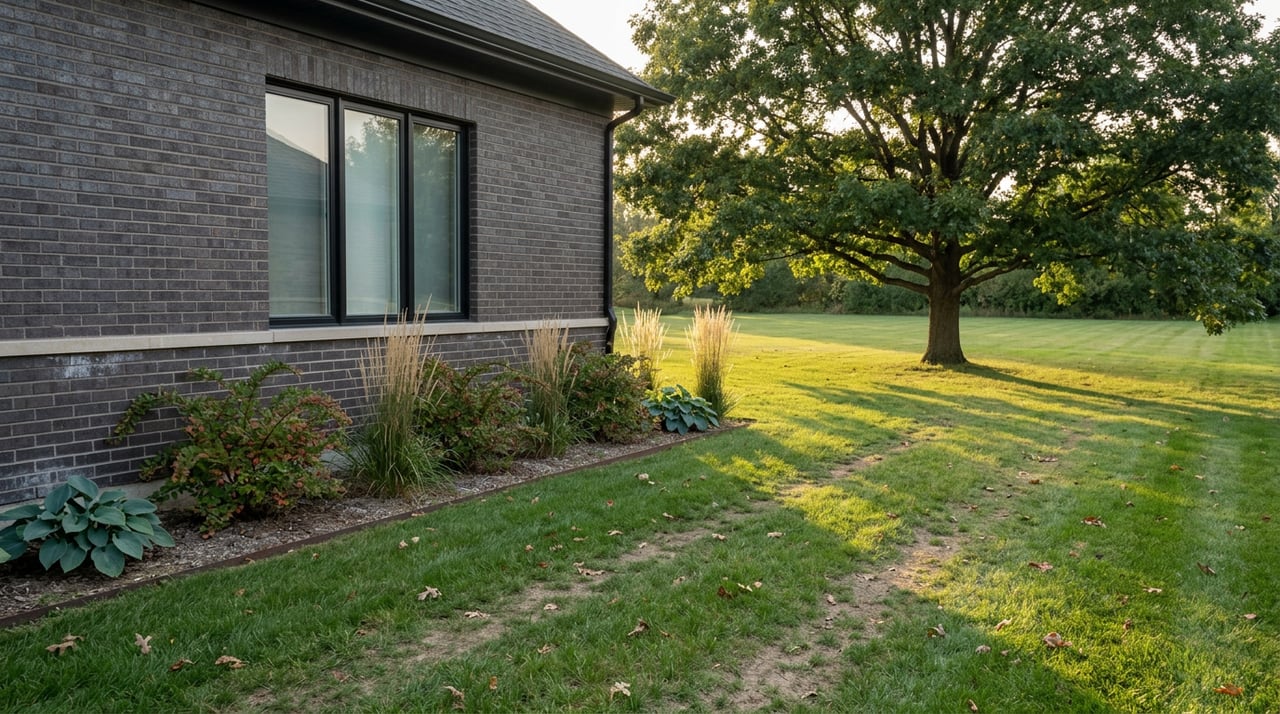
Doogan Park sits behind the Davidson Center off Park Lane, nine holes tucked into a stand of old oaks with the first tee by the pavilion. It's the only disc golf course inside Orland Park's village limits, and for a lot of regulars it isn't really a destination. It's a habit. You can play the whole thing, tee to final basket, in about twenty minutes without changing out of whatever you had on after dinner.
Ask two different disc golf platforms how good that course actually is, though, and you'll get two different answers. UDisc, which pulls from a large pool of players logging rounds through its app, rates Doogan Park at 3.7 out of 5 stars across 527 community ratings, a score the platform's own scale calls good. DiscGolfScene, a smaller site built specifically for course reviews, grades it a B- off just 10 reviews, and ranks it behind four other public courses within a short drive. Neither number is wrong. They're measuring different things, and the gap between them tells you something real about what this course is for.
What the Lower Grade Is Actually Comparing It To
DiscGolfScene doesn't grade Doogan Park in isolation. It stacks it against nearby options, and the pattern is consistent: the farther you're willing to drive, the higher the grade climbs.
| Course | Distance from Doogan Park | DiscGolfScene Grade |
|---|---|---|
| Doogan Park (Orland Park) | 0 miles | B- |
| Community Park (Palos Heights) | ~4 miles | B+ |
| The Meadows Disc Golf Park (Tinley Park) | ~5 miles | B+ |
| The Oaks (Mokena) | ~8 miles | A- |
| The Canyons (Lockport) | ~9 miles | A |
The courses earning A grades aren't just longer. They're built around natural terrain that punishes bad throws, the kind of wooded, creek-cut layouts that reward accuracy over convenience. Judged against that standard, a nine-hole course with no water hazards and no dense woods is always going to look modest. That's the standard DiscGolfScene's smaller, more dedicated review base tends to apply.
The Course Was Never Built to Compete on That Scale
Doogan Park's specs, logged with the Professional Disc Golf Association, explain why. The entire course runs 1,970 feet across nine holes, and every single hole measures under 300 feet. Nothing in the 300 to 400 foot range. Nothing over 400. Designer Steve Olson laid it out in 2008 so the front several holes play flat through oaks planted specifically for the course, then the ground rolls uphill toward the back of the property, adding just enough elevation to keep a short course from feeling flat-out boring.
The tee pads are rubber, not concrete or turf, and the PDGA lists the course as very cart-friendly, which matters more than it sounds. A course built for carts and short throws is a course built for families, first-timers, and anyone squeezing in a round on a lunch break rather than treating disc golf as a weekend project. Nobody is driving from Naperville to play Doogan Park for the challenge. They're walking over from a few blocks away because it's there.
Why the Bigger Crowd Still Calls It Good
That's also the likely explanation for the gap between the two rating platforms. UDisc's 527 ratings come from a much wider, more casual player base, people logging a round on an app after playing wherever happens to be closest, not necessarily comparing it against regional benchmarks like The Canyons. Against that bar, a fast, walkable, low-friction nine holes reads as exactly what it's supposed to be. DiscGolfScene's ten reviewers, grading it specifically against harder regional courses, are answering a different question: is this course technically demanding? The honest answer, on that question, is no. It was never trying to be.
Three Things Regulars Mention Before You Even Ask
A course this short still has quirks, and they're specific enough that they only show up in player accounts, not on a course map.
- Hole 6 runs tight against train tracks on the left. A disc that fades wrong doesn't just cost you a stroke, it can end up somewhere you're not getting it back.
- Hole 8 dead ends into those same tracks. The risk here is narrower: it only becomes a problem if you overthrow the basket.
- Hole 9 shares space with the park's baseball field. Discs that drift left can land in the middle of an active game, so a glance toward the field before you tee off is standard practice among regulars.
- The rubber tee pads get slick after rain, though more than one reviewer has noted they hold up better than expected even with morning dew still on the ground.
None of these are dealbreakers. They're the kind of small, specific knowledge that separates someone who's played the course a dozen times from someone reading a course map for the first time.
It's a Park Before It's a Course
Doogan Park has a gazebo with picnic benches and a permanent cornhole setup near the pavilion, which is a detail that shows up in review after review and tells you how the space actually gets used. This isn't a facility built purely for disc golf that happens to sit inside a park. It's a neighborhood park that happens to have disc golf baskets in it, which is a meaningfully different thing when you're deciding whether to bring a picnic blanket along with your bag of discs.
There's also an informal Doogan Park Disc Golf Club with its own presence on social media, the kind of grassroots group that organizes casual rounds rather than sanctioned tournaments. One longtime player, reviewing the course on DGCourseReview, recalled it as the first disc golf course built in the village, a detail that's hard to verify against any official record but lines up with how residents talk about it: not as the area's best course, but as the original one.
The Short Course Is the Point
If you want technical disc golf, the math is straightforward. The Oaks in Mokena and The Canyons in Lockport are objectively better courses by DiscGolfScene's own grading, and neither is more than nine miles from Doogan Park. Nobody serious about the sport should skip them.
But the same shortness that costs Doogan Park points on a review site built for comparing courses is the exact reason it works as a Tuesday evening habit. Twenty minutes, no fee, no car required if you're close enough to walk. It's the only course inside the village, and for the people who actually use it, that's a feature, not an asterisk.
Getting a feel for how a neighborhood actually spends its evenings, not just its listing photos, is part of knowing a place well enough to help someone move into it. If you're weighing a move to Orland Park, or you already live within walking distance of Doogan Park and are curious what your place is worth in today's market, Aaron Gaines offers a free home valuation built on the same kind of specific, on-the-ground knowledge as everything above.