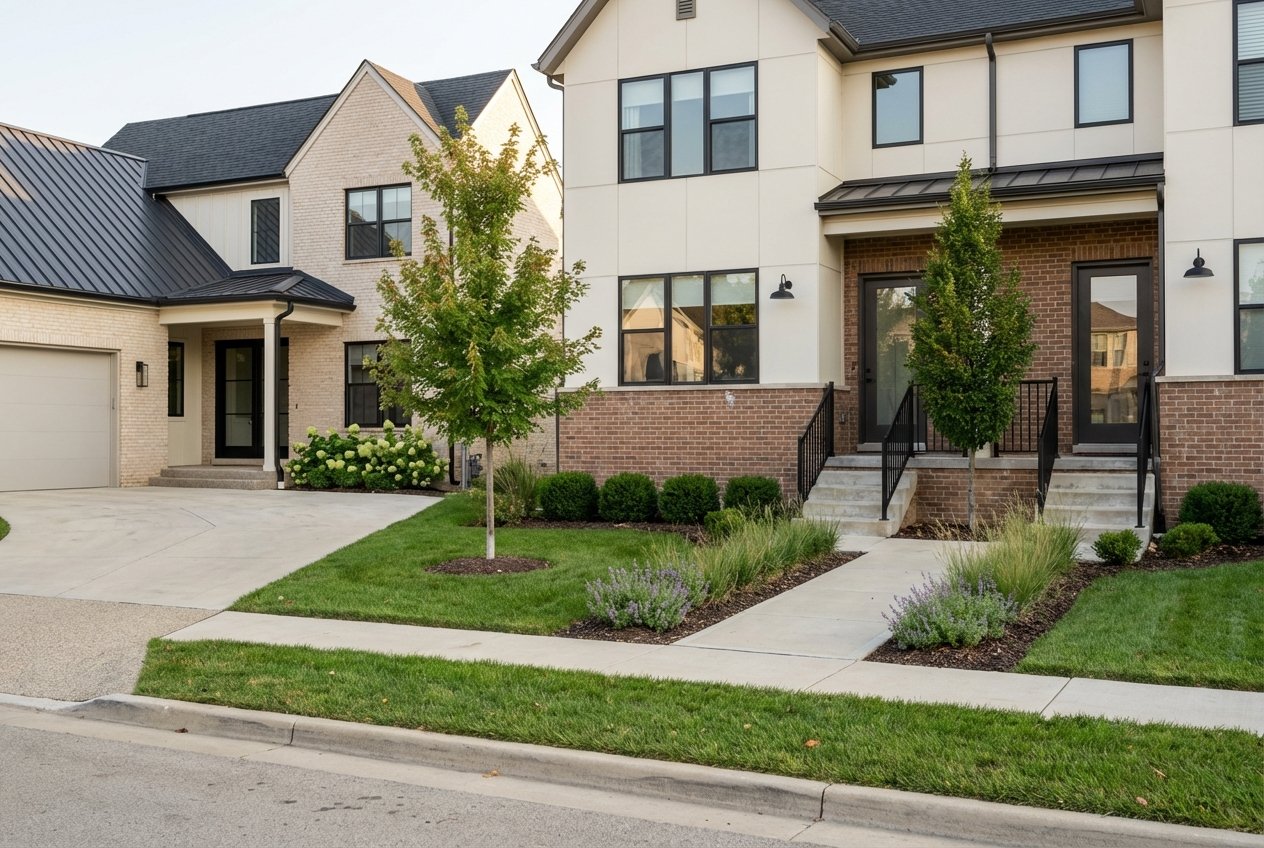
Thinking about a move in Orland Park but stuck between a single-family home and a townhome? You are not alone. Each option offers a different balance of cost, space, and upkeep, and the right fit depends on how you want to live day to day. In this guide, you will compare real monthly costs, maintenance, privacy, and long-term value so you can buy with confidence in today’s market. Let’s dive in.
Orland Park market at a glance
Orland Park pricing sits in the high 300s as of early 2026. Recent snapshots show a median sale price around $372,500 in January 2026 and a typical home value near $386,800 in that same time frame. Detached single-family homes often price higher than attached homes, which is common in suburban markets. Inventory is modest and conditions are moderately competitive, with speed and pricing varying by neighborhood.
What that means for you: entry price and month-to-month costs can look very different across property types and subdivisions. For a precise read, use current MLS comps for your target community.
Purchase price and affordability
In Orland Park, townhomes usually offer a lower entry price than similarly sized single-family homes. You will see smaller or older townhomes start in the high $200Ks, with larger units moving into the $400Ks and up depending on age, finish level, and location. Single-family homes commonly list from the mid to upper $300Ks through the $500Ks and beyond for larger lots and updated properties.
How to frame your search:
- If you want the lowest upfront price, start with townhomes and compare HOA coverage and amenities.
- If you need more bedrooms, yard space, or future expansion potential, expand to single-family options and weigh the added maintenance.
- Always compare total monthly cost, not just list price.
Monthly costs: HOA, taxes, insurance, maintenance
Your true monthly cost includes mortgage, property taxes, homeowners insurance, HOA dues if applicable, and a set-aside for maintenance. Here is how each piece typically plays out in Orland Park.
HOA dues on townhomes
Many Orland Park townhome communities charge monthly HOA dues in roughly the $230 to $360 range. Inclusions vary by association but often cover exterior maintenance, lawn care, snow removal, and common-area upkeep. Always confirm what your HOA covers in writing and whether there are any pending fee increases or special assessments.
Property taxes in Cook County
Cook County’s effective property tax rate often falls near 1.8 to 2.2 percent of home value based on academic and county analyses. Two similar homes can have different tax bills depending on assessed value, exemptions, and township. Many mid-priced Orland Park listings show annual taxes in the thousands of dollars. For specific numbers, review the tax history on your target property and consult the county assessor’s records. For context on Cook County tax patterns, see the University of Chicago’s county analysis on effective tax rates.
Insurance differences by property type
- Single-family: You typically carry an HO-3 policy that insures the structure and other structures on the lot. Coverage amounts reflect full replacement cost and can influence your premium.
- Townhome: Many townhomes are part of an association that carries a master policy for the building shell and common areas. You usually purchase an HO-6 policy for interior finishes, personal property, liability, and loss assessments. First, confirm whether the master policy is walls-in or walls-out so your HO-6 fills the gaps. Learn more about HO-6 coverage from this condo and unit-owner insurance guide.
Maintenance planning
A common rule of thumb for single-family homes is to budget about 1 percent of the home’s value per year for routine maintenance and smaller repairs. Older homes and larger properties can run higher. Townhome owners may spend less on exterior items if covered by the HOA, but HOA dues are part of your monthly cost and can change. Review the HOA’s reserve study and budget so you understand how future repairs are funded. For the 1 percent maintenance guideline, see this home maintenance budgeting overview.
Quick monthly cost framework
Use this framework to compare apples to apples:
- Mortgage principal and interest
- Property taxes based on the current assessed value and exemptions
- Insurance premium (HO-3 for single-family or HO-6 for townhome, adjusted for coverage)
- HOA dues if applicable
- Maintenance reserve using the 1 percent rule for single-family. For townhomes, set a personal reserve for interior systems and items not covered by the HOA
Illustrative range example for context only:
- Single-family at $400,000: taxes roughly $600 to $730 per month at 1.8 to 2.2 percent, plus a maintenance reserve near $335 per month using the 1 percent rule. Insurance varies by coverage and carrier.
- Townhome at $340,000: HOA commonly $230 to $360 per month. Taxes roughly $510 to $625 per month at 1.8 to 2.2 percent. Add an HO-6 policy and a modest interior maintenance reserve.
Your actual totals will depend on the property, assessment, exemptions, insurance quotes, and loan terms.
Maintenance and convenience: who does what
Single-family homes
You handle the roof, siding, exterior painting, landscaping, private driveway, and most exterior systems. You have more control over upgrades and timelines, and you avoid monthly HOA dues in many neighborhoods. Budget for periodic big-ticket items in addition to your annual maintenance reserve.
Townhomes
Associations often handle exterior and common-area maintenance, lawn care, snow removal, and amenity upkeep. That saves time and reduces surprise exterior expenses, but you pay HOA dues and follow community rules for alterations and exterior appearance. Owners still cover interior repairs and personal property. Always confirm the association’s “fee includes” list and master insurance details.
Privacy, space, and outdoor access
Single-family homes
Detached homes provide more privacy, larger yards, private driveways, and room for pets, gardens, and additions. If you value outdoor space, Orland Park’s park system and trail network can add to your lifestyle beyond your lot. Explore programs, sports facilities, and community amenities through the Village of Orland Park.
Townhomes
You will usually trade a large yard for a patio, deck, or small private lawn plus shared amenities. Many developments cluster near shopping and commuter routes for convenience. Community plans like those shown at Orland Ridge give a sense of typical footprints and amenity layouts.
Resale and financing considerations
Long-term appreciation
Academic research has found that detached single-family homes have often appreciated faster than attached homes in many markets because land value is a bigger driver over time. Local results vary by micro-market, HOA quality, and property condition. See a summary of findings in this property-type appreciation study. For Orland Park, rely on on-the-ground comps to evaluate likely resale range in your target subdivision.
Financing nuances for townhomes
Some townhome communities are legally structured as condominiums or common-interest communities. Lenders and agencies have project-level rules that can affect mortgage availability, especially for FHA, VA, and certain conventional loans. Ask your lender to review the project questionnaire and confirm warrantability early. For background, see this overview of condo and project financing considerations.
Who each option fits
First-time buyers
- Townhome: Lower entry price and less exterior upkeep can free up cash and time.
- Single-family: Worth a look if you need more space or plan to stay longer to spread out higher maintenance costs.
Growing households
- Single-family: More bedrooms, storage, and private yard space. Flexibility for future renovations or additions.
- Townhome: Larger floor plans exist, but confirm storage, parking, and outdoor needs are met.
Downsizers and commuters
- Townhome: A lock-and-leave lifestyle with HOA-managed exterior work is attractive for travel and low-upkeep living.
- Single-family: If you still want a garden or workshop, a smaller detached home can be a good fit.
Investors
- Townhome: Review HOA rental rules, caps, and lease minimums before you underwrite a purchase.
- Single-family: Fewer association constraints, but maintenance and turnover costs fall on you.
Smart due diligence checklist
Before you choose, protect your budget and timeline with a focused review.
For townhomes and HOAs
- Request the full resale packet early. Ask for recorded declaration and CC&Rs, bylaws, current budget, reserve study, 12 to 24 months of board minutes, insurance certificates, management agreement, and any litigation summary. Use this practical guide to reviewing HOA documents and reserves.
- Confirm what the HOA fee includes. Clarify if roof, exterior, lawn care, snow removal, water, and amenities are covered. Check whether the master policy is walls-in or walls-out so you can size your HO-6 correctly.
- Evaluate reserve health and delinquency. If reserves are low, expect higher dues or special assessments. Ask about recent fee increases and any developer control of the board. For Illinois community association context, see an overview of the Common Interest Community Association Act.
- Verify financing eligibility. If you plan to use FHA, VA, or a conventional loan with project requirements, have your lender confirm warrantability early.
For single-family homes
- Request utility history and recent maintenance invoices. Use the 1 percent rule to set your annual reserve, adjusting for age and condition.
- Inspect exterior systems closely. Roof age, siding condition, windows, and driveway can drive near-term costs.
Lifestyle and location tips
- Map your week. List where you work, shop, and spend free time. Townhomes often cluster near retail and arterials. Single-family neighborhoods may trade a longer drive for a quieter street and more room.
- Think five years ahead. Will you want an addition, fence, or garden shed? Detached homes usually provide more flexibility. HOAs can have alteration rules, so review them before you buy.
- Use local amenities. Orland Park’s parks, sports complexes, and community programs can complement smaller private outdoor spaces. Browse options with the Village of Orland Park.
Bottom line
- Townhomes can lower your entry price and reduce exterior chores. Balance that with HOA dues and association rules.
- Single-family homes deliver privacy, yard space, and flexibility. Budget more for maintenance and occasional large expenses.
- In Cook County, taxes are a major monthly driver. Use current assessments and exemptions for accurate estimates.
- Long-term value depends on location, property condition, and HOA health. Detached homes have often appreciated faster in many markets, but local comps should guide your decision.
Ready to see how these trade-offs look in the neighborhoods you like? Let’s compare real properties, real HOA budgets, and real tax bills so you can choose with clarity. If you want a data-backed, concierge experience from search to closing, reach out to the Lifestyle & Legacy Group to get started.
FAQs
What costs make townhomes affordable in Orland Park?
- Townhomes often have lower purchase prices and HOA-managed exterior work, but you must add HOA dues, property taxes, an HO-6 policy, and an interior maintenance reserve to your monthly budget.
How high are property taxes for Orland Park homes?
- Cook County effective rates often fall near 1.8 to 2.2 percent of value. Actual bills vary by assessment, exemptions, and township. Review a property’s tax history and consult county records.
Do I need insurance if my townhome HOA has a master policy?
- Yes. You will likely need an HO-6 policy for interior finishes, personal property, liability, and loss assessments. Confirm what the master policy covers first.
Which appreciates better in Orland Park, a single-family or a townhome?
- Research shows detached homes have often appreciated faster in many markets, but outcomes depend on location, HOA health, and condition. Rely on current, neighborhood-level comps.
What HOA documents should I review before buying a townhome?
- Ask for the declaration and CC&Rs, bylaws, current budget, reserve study, recent minutes, insurance certificates, management contract, and any litigation or special assessment history.